A Profibus DP network consists of a Profibus DP master and Profibus DP
slaves . The DeltaV Profibus DP card supports up to 64 slaves on a Profibus DP
network. A Profibus DP slave can support both process input and output data on
a host system such as the DeltaV system or it can support only process input or
only process output data. A maximum of 244 bytes of input values and 244 bytes
of output values are allowed per device.
There are two types of Profibus DP slaves: compact and modular. The
difference between a compact and modular slave is based partly on how Profibus
modules (referred to as Slots in the DeltaV system) are used in the device's
configuration. A Profibus module is a function such as analog input or analog
output or discrete input or discrete output, that can be added to a Profibus DP
slave's configuration. The configuration for a compact device is generated
based on a fixed number of modules in a particular order. The configuration for
a modular device is generated based on the number and order of modules that the
user selects. A Device Definition, identified by the revision level for the
device, is available for every Profibus DP slave . The Device Definition is
used to identify the Profibus DP slave and contains information that makes it
possible for manufacturer-independent configuration tools such as the DeltaV
Explorer to configure Profibus DP slaves. The Device Definition is described in
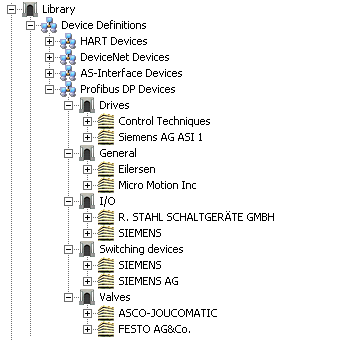
a manufacturer-supplied text file with a .GSD extension. Device Definition
files for Profibus DP devices reside in the DeltaV Library under Profibus DP
Devices:
The port on the DeltaV Profibus DP card is the Profibus DP master and
acts as the interface between the Profibus DP network and the DeltaV system.
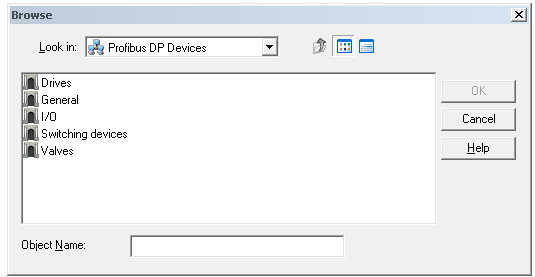
You use the DeltaV Explorer to add the DeltaV Profibus DP card and configure
your Profibus DP slaves. The following image shows the dialog for browsing to
Profibus DP slaves in DeltaV Explorer.